
torsdag 1 maj 2014


Nintendo 64
Nintendo 64 is a game console, the third launched by nintendo in 1993. I think i is a quite good console, though the graphics can be pretty irritating sometimes.... It was the first nintendo console with 3D graphics, and that made people really excited about it! The most popular games for it were Super Mario 64, Legend of Zelda - Ocarina of Time, and Star Fox 64. Many of these games were remade for Nintendo 3ds, Such as Star fox 64 3d And Ocarina of time 3d. Its 64-bit graphic was extraordinary at that time, and it sold very well. These days there are many emulators that make it possible to play Various n64 games on your computer or smartphone.
Check it out on: http://coolrom.com/
Find out more: Nintendo.wiki.com , Wikipedia
 N64 with various colored Controls.
 Ocarina of time cover.
 Star fox 64
Check it out on: http://coolrom.com/
Find out more: Nintendo.wiki.com , Wikipedia
N64 with various colored Controls.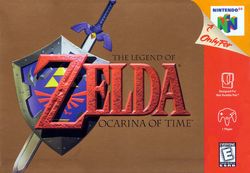 Ocarina of time cover.Star fox 64
onsdag 30 april 2014
Chemistry: Solubility
The other day, i made the new part of the Kitchen chemistry course, And this time the theme was solubility and uses. Dr Ashworth described that The liquid we dissolve something in is called a solvent and the thing that is being dissolved is known as a solute. So we made lots of cool experiments with lovents and solubility. We noticed that water and oil does not (of course.) go together. but drops of iodine tincture will most certainly be more soluble in oil than in water!
Because oil and fats are lighter than water, when you for example mix salad dressings, they will go on top of the water. Therefore, they are called surfactants. Because they are surface active!
Here´s a comment from when i made the course:
"When i dipped my finger in the jar with water and oil, separated, my finger got a layer of oil, and thus the water didnt touch it. when we took water, oil and washing liquid, we shook it and after about three minute it got separated, and the water was all murky and unclear. without the washin liquid, the water was clear!"
A chemical change is something that cannot be turned back into its original state when, cooked, for example. An egg that is cooked, or a loaf of bread baked in a hot oven is two examples on this.
A physical change is something that can be turned back into a preevious state, such as, for example water that is frozen turns into ice, and then it melts into water and so on. somewhere in between it is also turned into steam, the gas form of water.
We made a chromatogram with colors and blotting paper. Below is our comment on that.
"We didnt really have blotting paper (we didnt know where to find it, and what it really is!), but in the end, we got the idea of how it worked with papertowels and such! we noticed the blue shade of the red color stayed in the bottom, while the red shade went up. Like if the red colour is more water soluble than the blue one!"
Chromatography is a standard procedure for separating and examining mixtures. There are many variations but they all rely on the fact that molecules have different interactions with one substance than with another. We saw that the iodine prefers to dissolve in oil rather than water: it is more soluble in oil than in water. In our chromatography experiment the coloured molecules that are more soluble in water are swept along easily and travel a long way. On the other hand, those that are less soluble tend to interact more with the paper and travel more slowly. <-- chromatography="" explanation="" on="" p="" thats="" the="">
I hope you got all that, and that you found it interesting and entertaining to read! /Lukas
"If we have a liquid that cannot be seen through it is no longer a solution. A liquid such as milk appears white because of lots of tiny drops of fat. These fat droplets prevent light from getting through the liquid. This sort of liquid is known as an emulsion as one liquid (in this case water) is surrounding tiny drops of another liquid. This arrangement may also be familiar in emulsion paint." Dr Ashworth, Futurelearn.org
Because oil and fats are lighter than water, when you for example mix salad dressings, they will go on top of the water. Therefore, they are called surfactants. Because they are surface active!
Here´s a comment from when i made the course:
"When i dipped my finger in the jar with water and oil, separated, my finger got a layer of oil, and thus the water didnt touch it. when we took water, oil and washing liquid, we shook it and after about three minute it got separated, and the water was all murky and unclear. without the washin liquid, the water was clear!"
A chemical change is something that cannot be turned back into its original state when, cooked, for example. An egg that is cooked, or a loaf of bread baked in a hot oven is two examples on this.
A physical change is something that can be turned back into a preevious state, such as, for example water that is frozen turns into ice, and then it melts into water and so on. somewhere in between it is also turned into steam, the gas form of water.
We made a chromatogram with colors and blotting paper. Below is our comment on that.
"We didnt really have blotting paper (we didnt know where to find it, and what it really is!), but in the end, we got the idea of how it worked with papertowels and such! we noticed the blue shade of the red color stayed in the bottom, while the red shade went up. Like if the red colour is more water soluble than the blue one!"
Chromatography is a standard procedure for separating and examining mixtures. There are many variations but they all rely on the fact that molecules have different interactions with one substance than with another. We saw that the iodine prefers to dissolve in oil rather than water: it is more soluble in oil than in water. In our chromatography experiment the coloured molecules that are more soluble in water are swept along easily and travel a long way. On the other hand, those that are less soluble tend to interact more with the paper and travel more slowly. <-- chromatography="" explanation="" on="" p="" thats="" the="">
I hope you got all that, and that you found it interesting and entertaining to read! /Lukas
fredag 25 april 2014
Jean-Jacques Rousseau
Jean Jacques Rosseau was a 18th century philosopher and aouthor.
Born 1712 in switzerland, geneva, His mother died after his birth. Ten years later his father leaves him to run away from jail, due to an illegal duel. He was then raised by his aunt and uncle. he became the apprentice of an engraver, but ran away three years later. then he met madame Louise de Warens, who became his secret lover. in 1742 Jean Jacques went to paris where he met Denis Diderot, and helped him to complete Diderots Encyklopedia. Rosseau was very creative and found many ways to explain his philosophy. He believed that humans are inherently good, But are corrupted by society and that all people must enter into a social contract that requires people to recognize a collective "good will" which represents the common good or public interest. all citizens should participate and should be committed to the good of all, even if it is not in their personal best interest. He believed that living for the common good promotes liberty and equality.
Rosseau was a big supporter of educations. He said: We are born weak, we need strength,helpless we need aid; foolish we need reason.
 He also claimed: Man is born free, everywhere he is in chains. His novel Emelie emphasizes how allowing free expression and a focus on the environment instead of repressing curiosity will produce a well-balanced, freethinking child. He also believed that women needed to be educated as well as men, but in different directions.emphasizes how allowing free expression and a focus on the environment instead of repressing curiosity will produce a well-balanced, freethinking child. He also believed that women needed to be educated as well as men, but in different directions. He also believed that children should be educated in what he or she is interested in.
After A life of moving around from place to place (not everyone supported his thoughts and ideas!), he died in 1778 from a brain bleeding.
Born 1712 in switzerland, geneva, His mother died after his birth. Ten years later his father leaves him to run away from jail, due to an illegal duel. He was then raised by his aunt and uncle. he became the apprentice of an engraver, but ran away three years later. then he met madame Louise de Warens, who became his secret lover. in 1742 Jean Jacques went to paris where he met Denis Diderot, and helped him to complete Diderots Encyklopedia. Rosseau was very creative and found many ways to explain his philosophy. He believed that humans are inherently good, But are corrupted by society and that all people must enter into a social contract that requires people to recognize a collective "good will" which represents the common good or public interest. all citizens should participate and should be committed to the good of all, even if it is not in their personal best interest. He believed that living for the common good promotes liberty and equality.
Rosseau was a big supporter of educations. He said: We are born weak, we need strength,helpless we need aid; foolish we need reason.
After A life of moving around from place to place (not everyone supported his thoughts and ideas!), he died in 1778 from a brain bleeding.
Prenumerera på:
Inlägg (Atom)